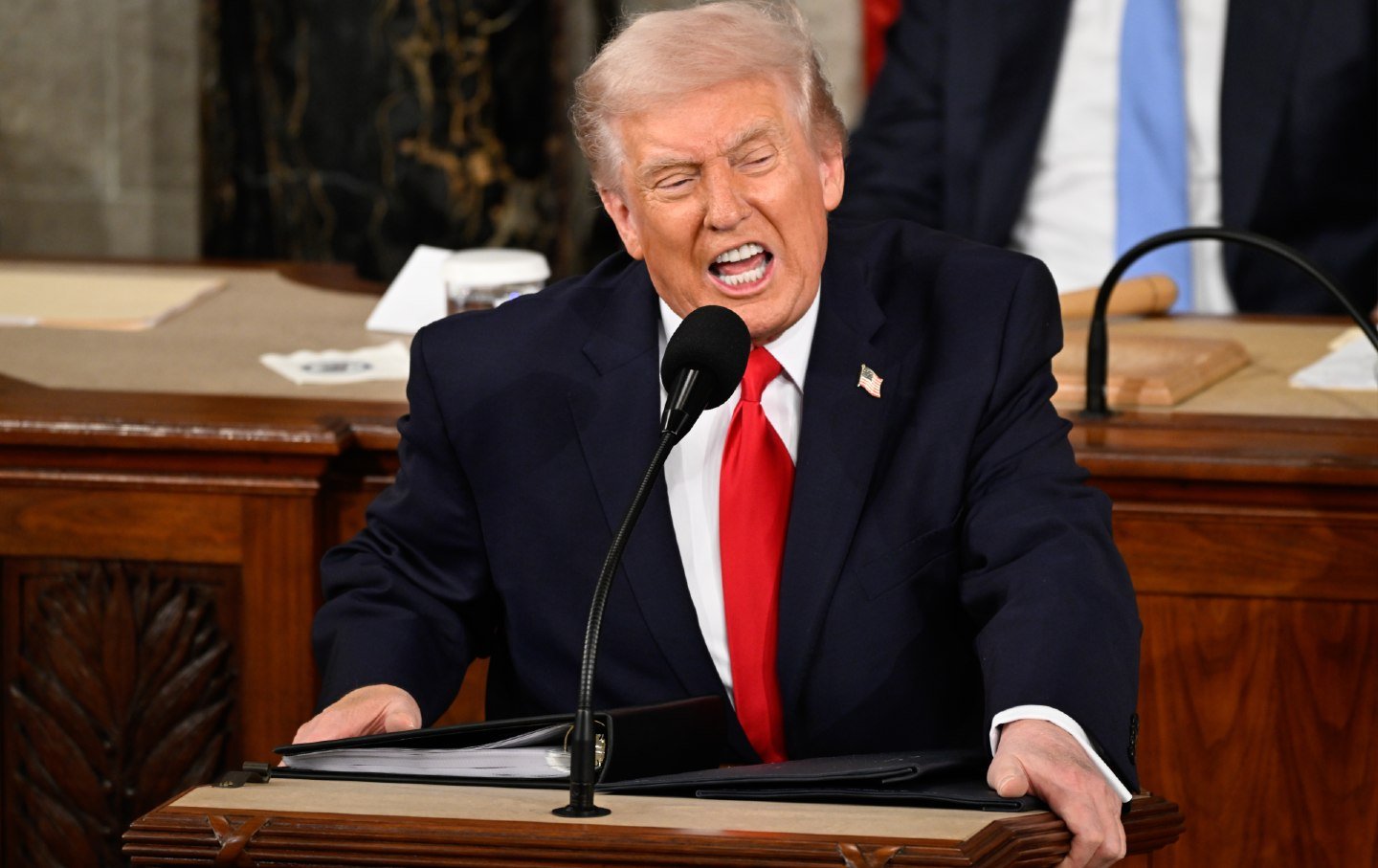
Trump’s 2026 State of the Union: A Campaign Rally in Disguise for an Ailing Strongman
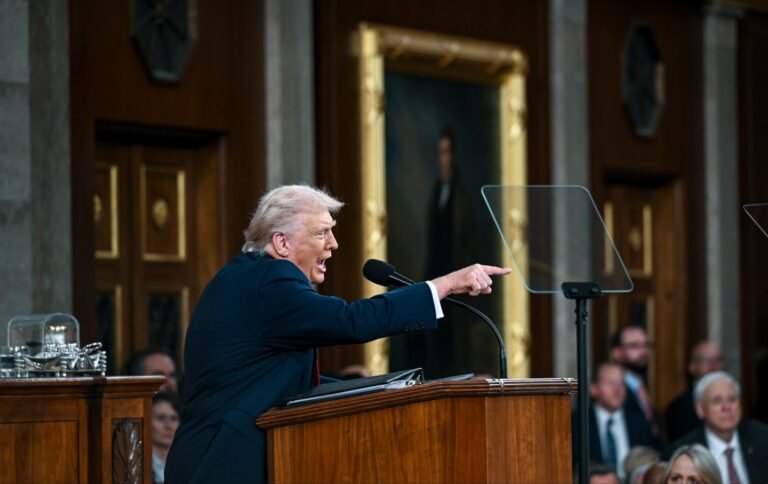
The pomp and circumstance traditionally associated with the State of the Union Address were once again overshadowed in 2026, as former President Donald Trump took to the podium. What unfolded was less a unifying address to the nation and more a familiar, sprawling political rally, reflecting a leader grappling with an increasingly fragmented public image and persistent political headwinds. The address, touted as a moment for presidential gravitas, instead laid bare the deep fissures in American politics and cemented Trump’s enduring, yet often contentious, appeal to his base.
Traditionally, the State of the Union is a constitutional obligation, a solemn occasion where the President reports to Congress and the nation on the country’s condition, often outlining legislative priorities and rallying support for a shared vision of the future. It’s a moment designed to project stability, bipartisanship, and national purpose. However, under Trump’s distinctive oratorical style, especially as noted by observers in 2026, these norms have often been reinterpreted, bending the institutional framework to fit a more performative, grievance-laden political strategy.
The Speech: Lurching from Teleprompter to Fantasy
From the outset, the 2026 address exhibited the hallmarks of Trump’s unique brand of communication, characterized by a discernible tension between the scripted formality required by the occasion and his inclination towards extemporaneous, often provocative, rhetoric. Critics noted a distinct “lurch” between moments of plodding teleprompter readings – presumably prepared by speechwriters attempting to inject policy or traditional decorum – and extended tangents that veered into what many described as “gothic MAGA fantasies.”
These “fantasies” were not grounded in conventional policy proposals but rather in a recurring narrative of a nation under siege, beset by unseen enemies, internal saboteurs, and external threats. Themes of deep state conspiracies, the perceived decay of traditional American values, and a romanticized, often inaccurate, recollection of past achievements dominated. The speech became a vehicle for rehearsing old grievances, particularly concerning the 2020 election, the integrity of institutions, and cultural battles, painting a picture of a nation teetering on the brink, saved only by the singular vision and strength of its “strongman” leader.
The “long-winded” nature of the speech contributed to its rally-like feel. Unlike structured policy addresses, Trump’s SOTU was marked by rhetorical flourishes, personal attacks (often veiled), and dramatic pronouncements that seemed designed more to elicit cheers from his supporters than to persuade undecided voters or engage in serious legislative discourse. It was a performance crafted not for unity, but for galvanizing a specific segment of the electorate, a stark contrast to the unifying rhetoric often hoped for from a State of the Union address.
Why It Matters: A Nation Divided, A Presidency Defined
The 2026 State of the Union, by eschewing traditional presidential comportment for a campaign-style address, carries significant implications for American politics and society. Firstly, it underscores the persistent fragmentation of the national discourse. Rather than offering a bridge across the political chasm, the speech deepened it, solidifying the loyalties of his base while further alienating opponents and even some moderate Republicans. For an “increasingly unpopular” leader, as suggested by contemporary analysis, this strategy might reinforce a core constituency but does little to expand influence or build broad national consensus.
Secondly, the blurring of lines between a presidential address and a political rally further erodes institutional norms. When the State of the Union, a constitutional event, becomes a platform for partisan campaigning and the airing of personal grievances, it diminishes the solemnity and perceived impartiality of the office. This normalization of political theatre over statesmanship can have lasting consequences for how future presidents engage with Congress and the public, potentially setting a precedent where formal occasions are viewed as mere opportunities for political messaging.
Finally, the image of an “ailing strongman” is particularly poignant. It suggests a leader who, despite projecting an image of unshakeable power, might be internally struggling with dwindling influence, public disapproval, or perhaps even a recognition of his own political vulnerabilities. The aggressive, almost desperate, tone of the speech could be interpreted as a defensive posture, an attempt to reassert dominance and control through rhetoric precisely because his actual political capital or popularity is in decline. This dynamic highlights a paradox: the more a leader resorts to portraying himself as the sole savior through “gothic fantasies,” the more it can expose underlying weaknesses.
In conclusion, the 2026 State of the Union Address by former President Donald Trump will likely be remembered not for its legislative agenda or unifying vision, but for its stark reflection of a deeply polarized nation. It was a spectacle that prioritized political performance over traditional statesmanship, revealing the enduring power of a particular brand of populism while simultaneously exposing the challenges faced by a leader fighting to maintain his grip on a shifting political landscape.
Source: https://www.thenation.com/article/politics/donald-trump-sotu-2026/
About the Author