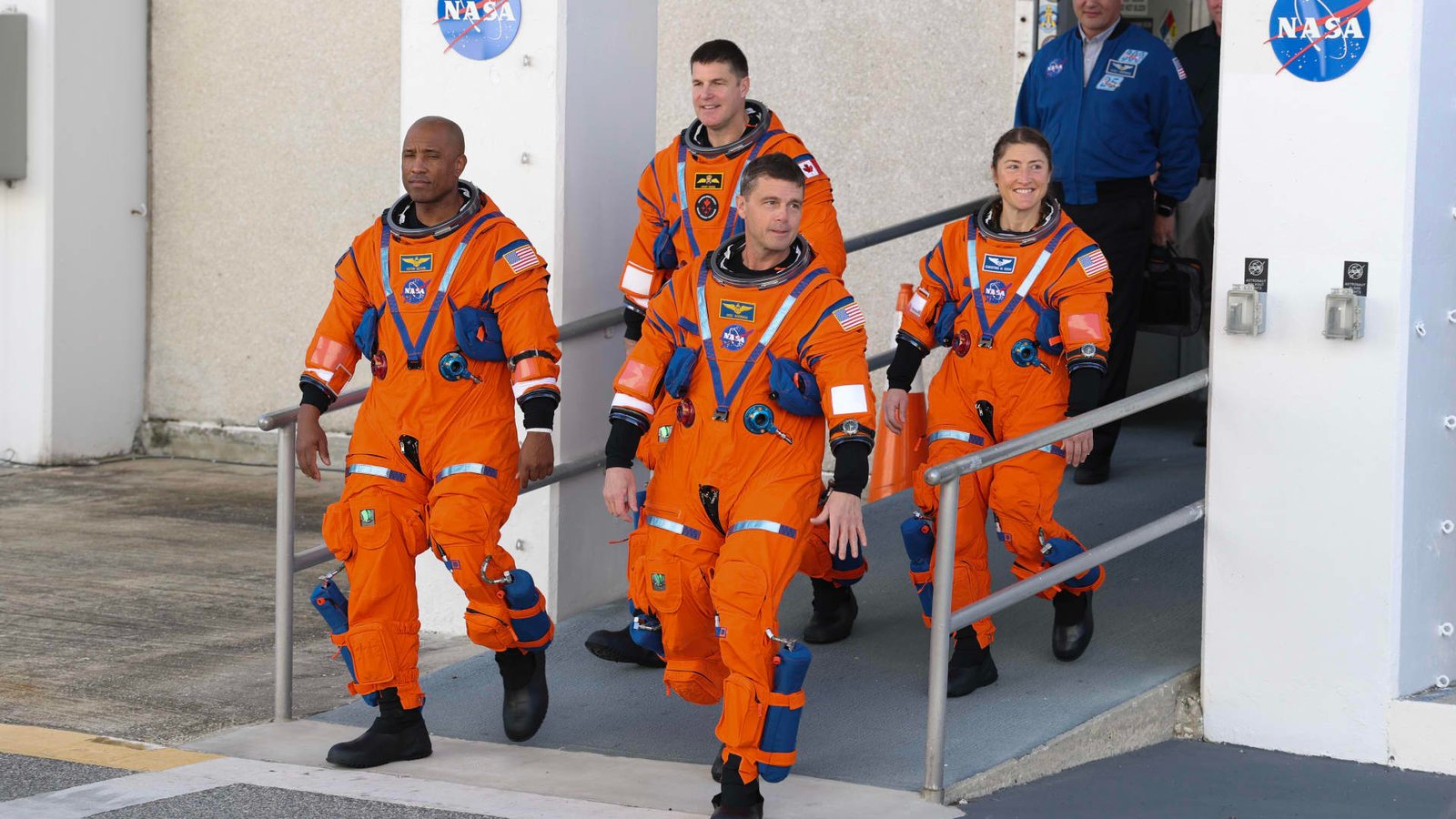
NASA Prepares for Landmark Artemis Moon Mission with First Black, First Female Astronauts
WASHINGTON | October 26, 2023
NASA is advancing plans for a historic
Artemis moon mission
that will see the first Black astronaut and the first female astronaut travel to the Moon. This upcoming journey will mark the first human lunar expedition in more than five decades, signaling a new era for space exploration under the Artemis program and expanding the reach of human spaceflight.
The mission represents a pivotal moment for global lunar exploration, pushing the boundaries of what is achievable in space. The National Aeronautics and Space Administration has consistently outlined its goals for the Artemis program: to return humans to the Moon, establish a long-term human presence, and use lunar exploration as a stepping stone for future crewed missions to Mars. The inclusion of astronauts from diverse backgrounds highlights a deliberate effort by the agency to foster inclusivity and broader representation in its space endeavors.
This particular
Artemis moon mission
is projected to be one of the early crewed lunar landings within the program. While specific crew assignments are yet to be finalized, the commitment to sending the first Black astronaut and first female astronaut to the lunar surface has been a key policy objective. These selections underscore NASA’s dedication to reflecting the diversity of the nation it serves, inspiring a wider demographic to pursue careers in science, technology, engineering, and mathematics (STEM).
The technological backbone for this ambitious undertaking is the Space Launch System (SLS) rocket, the most powerful rocket ever built by NASA. Designed to propel the Orion spacecraft and its crew far beyond Earth orbit, the SLS is critical for reaching the Moon. The Orion spacecraft, built for deep-space travel, will provide life support and transportation for the astronauts during their multi-day journey to and from the Moon, as well as during their time in lunar orbit. Both components have undergone extensive testing and development to ensure mission safety and success for the complex demands of human spaceflight.
The last time humans walked on the Moon was in December 1972, during the Apollo 17 mission. Over 50 years later, the Artemis program aims not just to revisit the Moon but to establish a sustainable presence. This involves developing habitats, conducting extensive scientific research, and testing technologies that will be essential for longer-duration missions, including those to Mars. The scientific objectives for this
Artemis moon mission
are broad, focusing on understanding lunar geology, the potential for water ice at the lunar poles, and the Moon’s formation and evolution.
NASA Administrator Bill Nelson has frequently reiterated the agency’s vision for Artemis. These official statements consistently emphasize the program’s role in global scientific collaboration, technological innovation, and its capacity to unite nations through shared exploration goals. The program has garnered significant international interest, with partner agencies and commercial entities contributing to various aspects, from propulsion systems to habitation modules, further highlighting the collaborative nature of modern
lunar exploration
.
The significance of sending the first Black astronaut and first female astronaut to the Moon extends beyond scientific achievements. It marks a profound cultural milestone, breaking barriers and challenging traditional perceptions of who belongs in space. This focus on
astronaut diversity
aims to create role models for future generations and foster a more inclusive future for space exploration worldwide. The selections are not merely symbolic but are based on the extensive qualifications and rigorous training of the astronaut corps, ensuring the most capable individuals are chosen for these challenging missions.
The comprehensive training regimen for Artemis astronauts involves simulations of lunar surface operations, spacewalks, emergency procedures, and extensive scientific instruction. These preparations ensure that the crew is fully equipped to handle the unique challenges of operating in the lunar environment, from extreme temperatures to reduced gravity. The mission profile for this
Artemis moon mission
will likely involve multiple extravehicular activities (EVAs) on the lunar surface, requiring precision planning and execution.
Looking ahead, the success of this mission is crucial for the broader objectives of the Artemis program. Future missions aim to deploy advanced robotic systems, establish a lunar orbital gateway known as Gateway, and build a base camp at the Moon’s South Pole. These steps are integral to developing the infrastructure needed for sustained human presence and for practicing deep-space operations in an environment closer to Earth before embarking on the more distant journey to Mars. The data and experiences gained from this mission will inform all subsequent phases of
human spaceflight
beyond Earth orbit.
What’s next for the Artemis program involves a continuous cycle of testing, development, and training. While the exact launch date for the mission carrying the first Black and first female astronauts remains subject to operational readiness and flight manifest adjustments, preparations are ongoing across NASA centers and with its commercial and international partners. Announcements regarding specific crew members, detailed mission objectives, and launch windows will be made public as the mission approaches its readiness milestones. The global space community watches keenly as NASA prepares to usher in a new era of lunar exploration.
Source: https://www.cnbc.com/2026/02/28/nasa-astronauts-moon-artemis.html
About the Author