Wildlight Entertainment Faces Significant Challenges Post-Highguard Launch, Report Details Internal Development
Industry Report | February 26, 2026
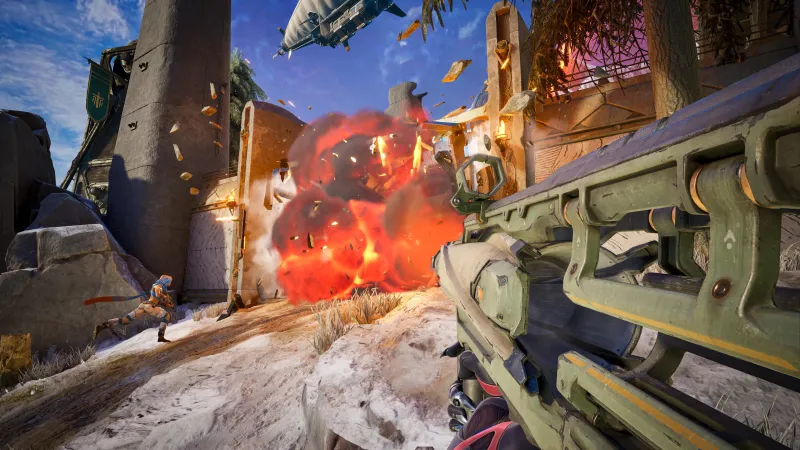
Wildlight Entertainment, the independent studio behind the recently launched first-person raid shooter Highguard game, has significantly reduced its workforce following the title’s release and subsequent decline in player engagement. A detailed report from Bloomberg on February 26, 2026, sheds light on the internal development struggles, strategic decisions, and the rapid downturn that led to the studio laying off the majority of its staff just two weeks after the Highguard game debuted.
Key Details of Highguard’s Development and Launch Fallout
The journey of the Highguard game began in 2021 when a group of developers from Respawn Entertainment, an EA-owned studio, departed to establish Wildlight Entertainment. Their motivation, according to the Bloomberg report, stemmed from a desire to create a studio with a more equitable profit-sharing model, contrasting with their experiences on successful titles like Apex Legends, which generated over $3 billion in revenue with a reportedly limited share for its developers.
Dusty Welch, co-founder and CEO of Wildlight, promoted a profit-sharing program to attract talent. The studio initially conceived a survival game akin to Rust, but it later evolved into the raid shooter that became Highguard, while retaining some original prototype elements. Funding support for the Highguard game came in part from China-based Tencent’s TiMi Studio Group, a detail reported by Stephen Totilo of Game File on February 17, 2026.
Testing and Strategic Decisions
Internal testing phases involved Wildlight staff, external players, and Tencent’s TiMi Studio Group. Ten Highguard developers interviewed by Bloomberg described these test sessions as positive. However, some employees raised concerns regarding the accuracy of these tests in reflecting a true public play environment. They noted that developers often assisted playtesters with mechanics and encouraged in-game communication, aspects not guaranteed once the game reached a broader audience.
Despite these concerns, suggestions from some employees to conduct a pre-launch beta or open playtest for the Highguard game were reportedly rejected by Wildlight leadership. The studio opted instead for a strategy of announcing the game and launching it swiftly thereafter, without prior public play. This approach was inspired by the perceived success of Respawn’s Apex Legends, which also employed a surprise launch model.
Public Reception and Launch Performance
The Highguard game was formally revealed at The Game Awards in December 2025. However, public reception quickly soured, with the title becoming a subject of negative online commentary and comparisons to other live-service shooters that had experienced rapid closures, such as PlayStation’s Concord.
Morale within Wildlight Entertainment, previously described as a “healthy, collaborative, transparent” environment by the interviewed employees, reportedly declined significantly during the final two months leading up to the launch, following the negative public reception after the Game Awards reveal.
Highguard officially launched on January 26, 2026, across PlayStation 5, Xbox Series X/S, and PC. While the game initially saw a strong debut, reaching over 100,000 concurrent players on Steam, this number quickly diminished. The Steam reviews for Highguard currently stand at “mixed.” Critical reception also varied, with Game Informer awarding the title a 7.5 in its review.
Studio Layoffs and Current Operations
Roughly two weeks after the Highguard launch, around February 11, 2026, Wildlight Entertainment laid off the majority of its 100-person staff. The Bloomberg report indicates that fewer than 20 developers remain at the studio. These remaining employees have since been responsible for releasing two substantial patches for the Highguard game.
As a free-to-play title, Highguard’s revenue model is heavily reliant on player retention and in-game purchases of cosmetics and other items. The substantial reduction in staff raises questions about the long-term viability and ability to sustain ongoing content updates for the Highguard game.
Why It Matters for the Video Game Industry
The rapid decline of Highguard and the subsequent studio layoffs highlight the inherent challenges and risks associated with live-service game development, particularly for new studios. It underscores the critical importance of effective pre-launch strategies, transparent player engagement, and sustainable business models in a competitive industry increasingly dominated by established franchises. The experience also serves as a case study on the potential pitfalls of mimicking past successes without adapting to evolving market conditions and player expectations.
What’s Next for Highguard and Wildlight Entertainment
The Highguard game remains live and continues to receive updates from its significantly reduced development team. However, the long-term sustainability of the title under these circumstances is uncertain. The situation at Wildlight Entertainment prompts broader discussions within the video game industry about funding models, development timelines, and the human cost of rapid game launches in the competitive live-service genre.
About the Author